

Norenko Andrey // Shutterstock
How to streamline your food manufacturing process
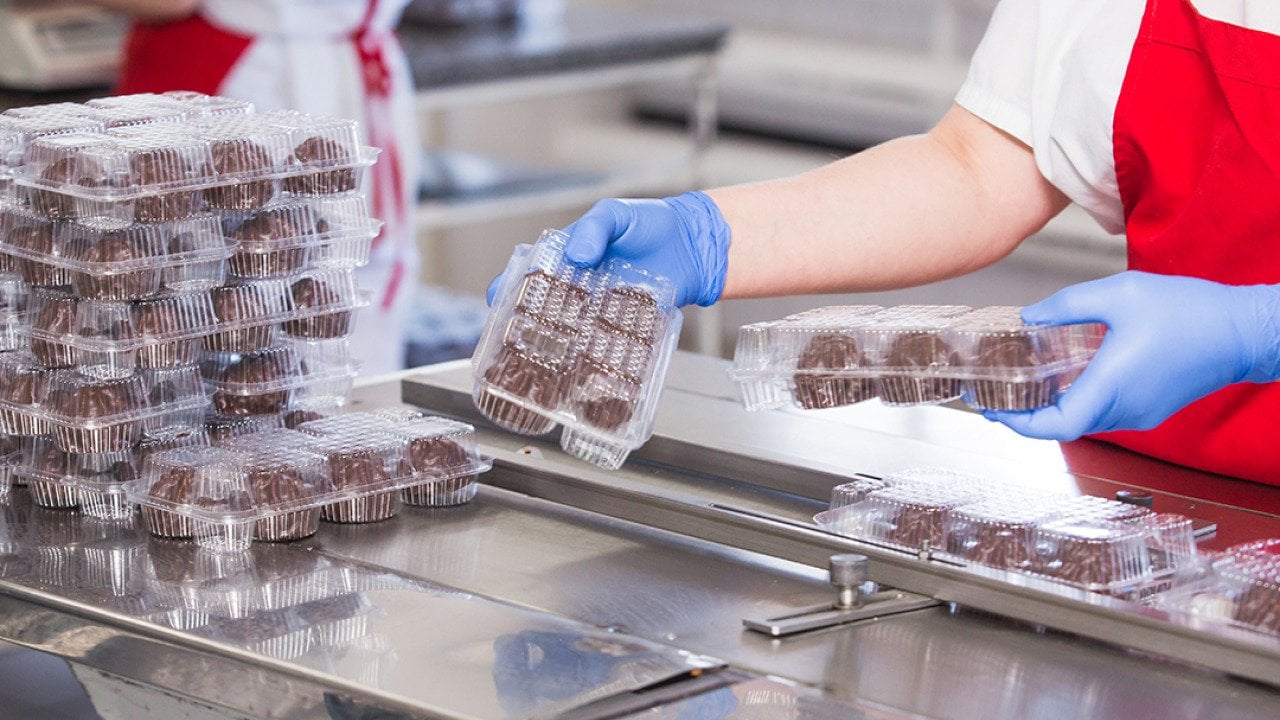
Meeting rising demand, maintaining strict hygiene regulations, and prioritizing efficiency are growing pressures for food manufacturers. Many of these manufacturers are reducing manual operations, and their associated risks, to handle increasing order volumes.
The goal of implementing automation is not to replace workers, but rather to streamline processes, help protect employees from workplace accidents, and increase reliability. Explore Ska Fabricating’s guide on productive methods for streamlining your food manufacturing process.
How Does Automation Improve Production Speed and Consistency?
Modern food production lines are under pressure to meet demanding targets, whether it is creating tighter profit margins or producing higher quantities of products. Introducing automated production helps you achieve a reliable speed to keep on top of demand.
Automated food manufacturing works at your preferred speed and handles repetitive tasks with ease. Replacing manual processes with automation means you can meet these targets and maintain productivity. Other benefits of automation include safety and operational efficiency, primarily through:

Courtesy of Ska Fabricating
Consistent Performance
Even if manual container handling eventually reaches certain speeds, fatigue and product demands can slow down production. Manual processing can only reach a certain level of efficiency. Trying to maintain a fast production line with manual operators can make satisfying client expectations difficult.
FSMA Compliance
Food production manufacturers need to outline a safety plan, according to the Food Safety Modernization Act (FSMA). The plan must include information on preventing hazards and the controls in place to lower the risk of contamination.
Automation minimizes human contact through built-in controls, therefore limiting the risk of contamination. An automated process ensures your production line remains compliant, eliminating the need to manage potential barriers with human operators.
Limiting Injury Risks
A human-operated production line poses a high risk of workplace injuries, from lifting materials to operating and moving heavy machinery. Particularly with handling heavy materials and equipment, workers are at greater risk of developing musculoskeletal disorders (MSDs).
Additional hazards leading to MSDs include poor posture and repeatedly lifting heavy materials, causing back injuries and sprains. Operating an automated production line reduces the risk of worker injuries and the potential liability for workplace accidents.
Hygiene Control
Maintaining stringent hygiene rules while working with food is a time-consuming yet fundamental task. Federal regulations detail the protection measures under Good Manufacturing Practices, including maintaining a clean space and personnel requirements.
Managing an automated production line eliminates the risk associated with human interaction and incorporates automated cleaning methods. Implementing ionized air rinsing effectively removes fibers and dust from containers.
It is harder to reach the same hygiene standards as automation with manual processing.
What Types of Automation Can Benefit Food Manufacturing Facilities?
Introducing automation to your food production line saves on manual labor, offering consistency and speed. Various types of automation equipment are available to help your facility flourish and achieve high productivity:
- Automated depalletizers: Using an automated depalletizer enables you to remove containers quickly. The depalletizer transports products onto a conveyor for the packaging steps and processing stages.
- Conveyor and accumulation systems: Fitting a conveyor allows for the easy transportation of food products from one stage of the process to the next. Introducing an accumulation system helps maintain a smooth process.
- Sealing and case erectors: A case erector and sealing system work together to automatically assemble packaging and seal products during the automation process. This helps minimize errors in packaging.
- Filling machines: Using an automated filling system to fill packaging with precise amounts of food products helps control quantity levels and enhance consistency. Filling automation also limits waste.
- Verification and inspection: Incorporating a verification and inspection system helps maintain safety by automatically checking for product quality and correct labeling. Detecting issues early in the process allows you to rectify problems quickly.
What Are the Different Types of Depalletizers?
Finding the best depalletizers for food manufacturing is a significant challenge. Determining the right match involves understanding the key features of depalletizer models:
Full-Height Depalletizers
Designed for fast-paced environments, full-height depalletizers efficiently unload pallets. The system lifts each pallet to align with the conveyor, allowing for layer-by-layer container removal.
In automatic systems, pusher arms separate layers and remove tier or slip sheets. Manual models rely on operator assistance for this task.
Automatic full-height depalletizers maximize throughput with minimal intervention, providing consistent, rapid unloading. Manual options offer flexibility and can be a cost-effective choice for varying demands or lower volumes.
Their compact design makes them suitable for confined spaces and ideal for handling containers such as jars and cans.
Half-Height Depalletizers
For operations using half-height pallets, specialized depalletizer models are available.
Available in both manual and automatic configurations, half-height depalletizers gently sweep each layer of containers onto the conveyor system.
Automatic half-height solutions provide controlled, repeatable performance for smaller-scale automation. Manual half-height depalletizers offer exceptional versatility, often being portable and easily storable when not in use.
Their design also allows for easier servicing and maintenance due to enhanced accessibility.
What Equipment Upgrades Can Streamline Food Production?
If you currently manage a manual operation or an automated production line that needs a revamp, upgrading your equipment can improve efficiency in your business. Advancing to better technologies ensures your production line remains consistent and reduces the risk of faults.

Courtesy of Ska Fabricating
Some examples of these upgrades include:
- Adaptable handling: Upgrading your equipment to depalletizers that can handle multiple container types is essential for creating a consistent production line. Adaptable handling features enable quick product changeovers and eliminate restrictions where manual handling or outdated equipment falls short.
- Modern technology: Slow manual handling or outdated equipment may be why you are struggling to meet client demand. Older systems fall short when it comes to maintaining speed and handling various pallets because they are harder to maintain, more likely to break down, and less efficient than modern technology. Adding newer depalletizers to your facility creates a smoother production line and enhances overall productivity.
- Sensors and controls: Investing in newer depalletizer models is an opportunity to monitor real-time data to evaluate progress. Sensors and smart controls are valuable additions that enable the diagnosis of issues as they arise and identify areas for improvement.
- Flexible components: Incorporating depalletizers that can manage multiple production lines and various product materials helps keep up with demand. Flexible components allow you to make minor adjustments to meet client requirements without the need for continuous equipment upgrades.
- Prioritizing quality: Investing in additional machinery upgrades, such as sealing and labeling systems, allows your production line to maintain a competitive speed. Upgrading additional components also helps keep consistent quality across all areas.
Choosing Depalletizers for Food Manufacturing
It is essential to remember that some depalletizers are more suitable for particular manufacturers than others. There are some key factors to consider before selecting a depalletizer for your operation:
- Flexibility: If you anticipate future changes to your production line, opting for portable depalletizers is a viable option. Portable depalletizers are typically half-height and are well-suited for use in small spaces. You can also use a pallet jack to move them.
- Accessibility and maintenance: Easy access to specific parts of an automated depalletizer for maintenance purposes limits downtime.
- Speed of production: Consider a depalletizer’s maximum number of cans per minute (CPM) to prioritize the speed of your production line. Choosing an efficient model to match your expectations is crucial to avoid disruption. Facilities with several production lines will require quick changeover speeds.
- Height and weight: The maximum weight capacity and height restrictions must meet your requirements. Think about your production line and whether it requires the capacity for full-sized pallets. Furthermore, take the average load weight into account.
- Material type: Assess the materials your production line works with and whether machinery that can operate various material types is a productive choice. Materials such as plastics and cans may need specific handling methods to avoid damage.
- Automation limits: Fully automated depalletizers require minimal operator direction. Manual depalletizers need operators to handle the controls. Evaluate the size of your production line and whether full automation is necessary.
4 Methods for Prioritizing Food Safety
When selecting equipment, it is crucial to consider the food safety features and how they will enhance the production process. Understanding the mechanics behind automation allows you to realize the full potential of automation and streamlining food manufacturing:
Washdown Ratings
Machinery design and materials are essential for maintaining hygiene standards and determining sanitization processes for automated food production systems.
While stainless steel offers corrosion resistance and withstands strong cleaning products, other materials, such as powder-treated mild steel, are also used, each contributing to optimal hygiene.
A machine’s ability to withstand frequent water exposure is determined by its ingress protection (IP) rating, also known as the washdown rating. The higher the rating, the greater the protection against harsh chemicals and regular sanitation.
Managing Dunnage
Dunnage, such as slip or tier sheets, can lead to accumulation issues. Replacing manual dunnage removal with an automated system offers significant convenience benefits.
Automated systems separate dunnage into distinct stacks for easier removal, eliminating the need for manual sorting. While cleanliness remains a factor, the primary advantage lies in streamlining the process.
Manual dunnage handling can be cumbersome. Automated systems simplify management, enhancing operational efficiency and streamlining the entire process.
Ionized Air Rinsing
Even if you follow strict cleaning and sanitation methods, your work environment can still be exposed to hygiene hazards, such as dust particles and other debris. Introducing ionized air rinsing removes the electrical charge that makes debris and dust stick to surfaces. Therefore, removing these hygiene concerns is easier than it would be with manual cleaning.
Ionized air rinsing is beneficial for maintaining clean production lines, enabling repeated use in food manufacturing and meeting demand.
Changeover Efficiency
Especially for smaller food manufacturing facilities with just one production line, the ability to quickly manage product changeover is essential. Automated systems operate efficiently to meet specific requirements, such as following allergen advice to prevent contamination.
Depalletizers can quickly change over product materials and adjust settings to limit downtime, a cause for concern with manual operations.
How to Calculate Your ROI
The deciding factor for implementing an automated depalletizer system is the return on investment (ROI). A practical method for analyzing the potential effect of automated manufacturing is to compare predictive costs with current manual manufacturing costs:
- Labor costs: Consider the salary of an operator team and compare these costs to the price of purchasing an automated depalletizer. When you examine productivity differences, investing in a depalletizer is likely to enhance your production line. You may also save on hiring and training new employees to operate machines.
- Possible damage: Mistakes with manually handling manufacturing machinery can cause damage. Introducing automated depalletizers limits the risk of harm and reduces the costs for replacement parts. Additionally, there is a lower possibility of damaging food products.
- Automation speed: An automated depalletizer operation keeps machines running and eliminates the need for frequent breaks. Automation ensures consistent production line speed and meets rising demand.
- Limiting compliance issues: An automated depalletizer can help maintain compliance with hygiene and contamination standards. Manual handling carries a higher risk of contamination, potentially leading to product recalls.
- Scheduled maintenance: The efficiency and reliability of automated depalletizers indicate a lower chance of downtime and less frequent maintenance. Investing in reliable automated equipment keeps your production lines running and saves on costly emergency maintenance.
A thorough analysis of the above factors helps you gain a clear understanding of the financial and operational benefits of automated manufacturing.
Why Automated Depalletizers Keep Your Business Growing
When adapting to the changing landscape of higher demands, the switch to automated depalletizers for food manufacturing is a productive transition. Automation has the potential to enhance reliability, limit mistakes, and increase speed and productivity, allowing your business to thrive.
Automated depalletizers can help combat the frequent challenges that arise from manual handling, such as maintaining clean production lines. The automated machinery can also perform repetitive tasks, including removing packaging materials and facilitating quick changeovers.
You can experience a greater ROI to keep your production line competitive over time. Investing in automated depalletizers promotes consistency and a safer work environment.
This story was produced by Ska Fabricating and reviewed and distributed by Stacker.