

Key Takeaways
- Associate degree holders can start earning $33,000-$45,000 in ag tech roles two years sooner than bachelor’s graduates, potentially accumulating $70,000-$90,000 while others complete four-year programs.
- Bachelor’s degrees open doors to management-track positions starting at $57,000+ with career peaks reaching $105,000+, compared to associate-level caps around $70,000.
- Newman University’s 2+2 pathway offers southwest Kansas students a $20,000 annual scholarship for two years to complete bachelor’s degrees locally after earning associate degrees from partner community colleges.
- The optimal timing strategy depends on career goals: associate-first for immediate income and field testing, direct bachelor’s for management aspirations.
- Southwest Kansas students gain access to cutting-edge mobile ag lab training starting summer 2026 through regional partnerships.
For high school graduates eyeing agricultural technology careers in southwest Kansas, timing matters as much as education quality. The choice between diving straight into a four-year program or starting with a two-year associate degree isn’t just about academic preferences—it’s a strategic decision that affects immediate earning potential, long-term career trajectory, and financial planning for the next decade.
Start Earning in Two Years vs Four: The Real Career Entry Speed Difference
Associate degree programs deliver workforce-ready graduates in roughly two years, while bachelor’s programs require four full years and 120 credit hours. This timing difference translates into immediate financial impact. Associate graduates can begin earning in ag tech roles while their peers continue studying, potentially accumulating $70,000-$90,000 in wages before bachelor’s degree holders even enter the job market.
The speed advantage becomes particularly compelling in Kansas, where community colleges like Garden City, Dodge City, and Seward County have designed their agriculture programs specifically for rapid workforce entry. These programs focus on practical skills—livestock evaluation, farm equipment operation, and agricultural supply chain management—that employers value immediately. Newman University’s Agricultural Technology Management program recognizes this value proposition by creating seamless pathways for associate degree holders to continue their education locally.
However, the four-year investment opens doors that remain closed to associate-level graduates. Bachelor’s degree holders enter the workforce at higher salary levels and advance more quickly into supervisory and management roles. The question becomes whether students prioritize immediate income or long-term earning potential—or whether they can strategically capture both advantages through a 2+2 pathway.
Kansas Associate vs Bachelor Ag Tech Salary Breakdown
Entry-Level Associate Positions: $33,000-$45,000 Range with Specialization Premium
Agricultural technicians with associate degrees in Kansas typically start earning around $35,000-$45,000 annually, with agricultural mechanization graduates averaging $39,650 in early career positions. These roles include farm equipment technician, livestock buyer, agricultural supply specialist, and crop scouting assistant positions that provide immediate entry into the agricultural workforce.
Specialization within associate-level programs can command premium wages. Grain buyers and energy sales specialists with two-year degrees often earn $64,000-$66,000 annually, demonstrating that strategic specialization can rival bachelor’s entry salaries in specific market segments. The key lies in targeting high-demand niches where hands-on experience and technical skills matter more than advanced academic credentials.
Bachelor’s Degree Advantage: $57,000+ Entry to $105,000+ Career Peak
Bachelor’s degree holders enter Kansas ag tech careers at significantly higher starting salaries, with K-State Agricultural Economics graduates averaging $58,000 in starting positions and achieving 98% employment within six months of graduation. Agronomy sales positions typically start between $47,000-$54,000, while agriculture operations specialists average around $62,966 nationally.
The bachelor’s advantage extends beyond entry-level compensation. Mid-career agricultural technologists in Kansas earn approximately $105,840 annually, with top performers reaching $140,020. These positions—including farm appraisers, agricultural financial analysts, and crop consultants—require the analytical and management skills developed through four-year programs.
Long-Term Earning Trajectory: Management Track vs Technical Roles
Associate degree holders typically plateau around $70,000 annually in specialized technical roles, while bachelor’s graduates progress into management positions earning $87,700-$111,800 in Kansas agribusiness markets. The trajectory difference becomes pronounced after five years, when bachelor’s holders begin accessing supervisory roles in grain management, agricultural lending, and corporate agribusiness operations.
Career advancement patterns reveal the bachelor’s degree as a gateway to leadership positions. Agricultural operations managers, regional sales directors, and farm finance specialists increasingly require four-year credentials as baseline qualifications, regardless of demonstrated technical competency.
Southwest Kansas Community College Options and Transfer Pathways
Garden City, Dodge City, and Seward County Partnership Programs
Southwest Kansas students benefit from established transfer agreements between regional community colleges and four-year institutions. Garden City Community College, Dodge City Community College, and Seward County Community College have formalized pathways that guarantee admission to bachelor’s programs upon associate degree completion.
These partnerships eliminate transfer credit uncertainty and reduce time-to-degree completion. Students can complete foundational agriculture courses, business fundamentals, and general education requirements locally before transitioning to specialized bachelor’s programs. The arrangements particularly benefit students who need to maintain employment or family responsibilities while pursuing education.
Barton Community College’s Associate in Science Agriculture program exemplifies the transfer-focused approach, designing coursework specifically for seamless transition to four-year institutions. Students gain practical experience through laboratory work and internships while building academic foundations for advanced study.
Mobile Ag Lab Training Starting Summer 2026
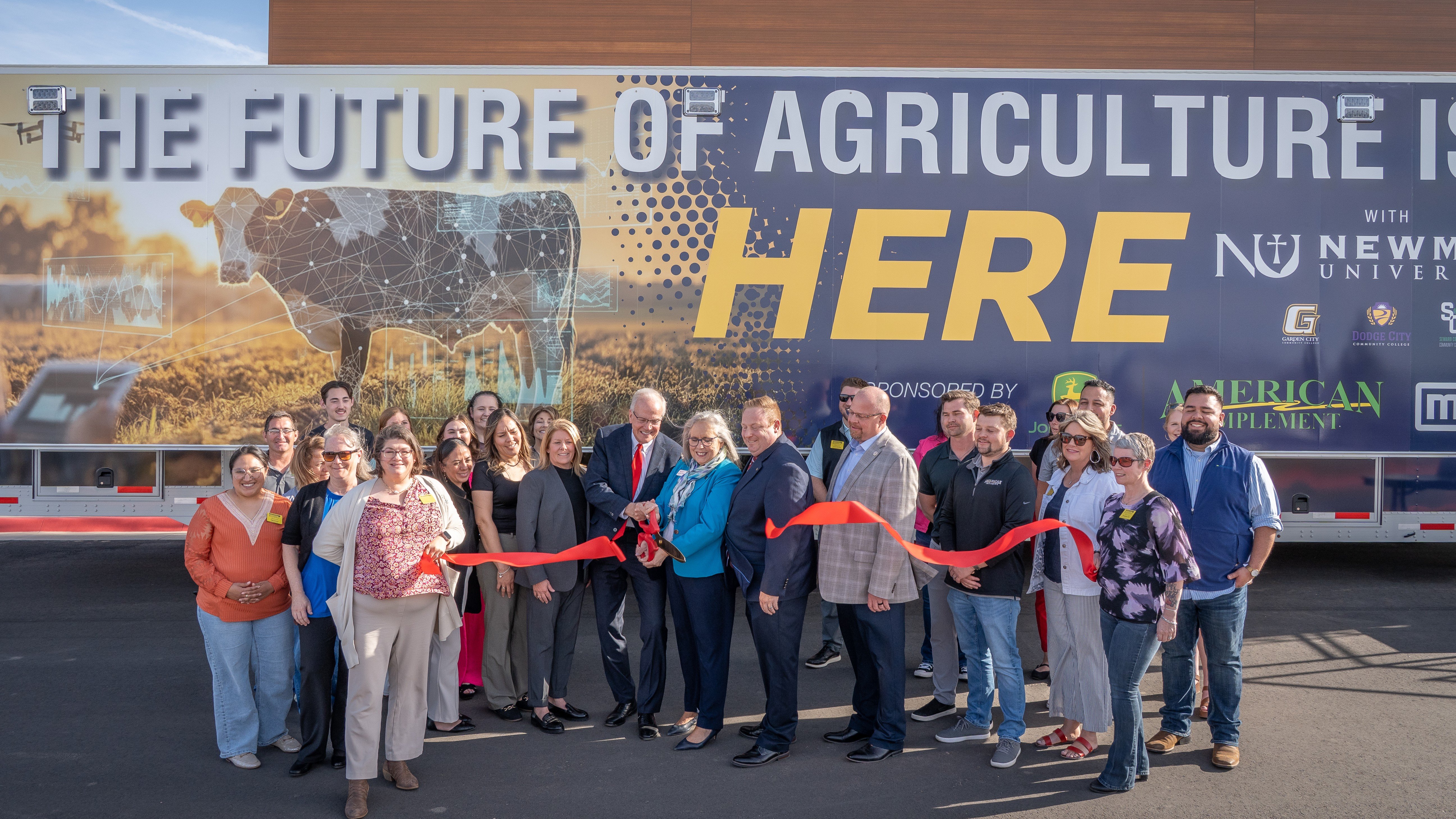
Newman University’s $1.2 million Smart Mobile Agriculture Lab represents a breakthrough in regional agricultural education delivery. The climate-controlled trailer brings cutting-edge technology—including drone operation, tractor driving simulations, and data analysis equipment—directly to southwest Kansas communities starting in summer 2026.
The mobile lab serves students across the educational spectrum, from community college associate programs through bachelor’s degree completion. Students gain hands-on experience with precision agriculture technology, artificial intelligence applications, and agricultural data analysis without requiring expensive on-campus laboratory facilities. The lab’s mobility ensures equitable access across the geographically dispersed southwest Kansas region.
Industry partnerships with American Implement, MJE, Garden City Co-op, and Heartland Soil Services provide real-world training scenarios and direct connections to potential employers. Students work with actual agricultural data and equipment, bridging the gap between classroom theory and workplace application.
Newman’s $20,000 Annual Scholarship Bridge: Making Bachelor’s Completion Affordable
HERE Program Financial Benefits for Transfer Students
Newman University’s Higher Education Right HERE program automatically awards $20,000 per year for two years, totaling $40,000, to students transferring from partner community colleges with completed associate degrees. The program additionally matches Pell Grant awards dollar-for-dollar up to $7,400 per academic year, potentially covering substantial portions of bachelor’s degree costs.
The scholarship structure specifically targets the financial barrier that prevents many associate degree holders from pursuing bachelor’s completion. By reducing the cost differential between stopping at an associate level versus continuing education, Newman makes the 2+2 pathway financially viable for families across income levels.
Beyond direct financial support, the HERE program reduces hidden costs associated with bachelor’s degree completion. Students avoid housing expenses, minimize transportation costs, and can maintain existing employment while pursuing advanced credentials. These factors often represent thousands of dollars in additional savings beyond tuition support.
Local Bachelor’s Completion Without Relocating
The HERE program delivers bachelor’s degree completion directly in southwest Kansas communities, eliminating relocation requirements that often derail degree completion plans. Students maintain established support systems, continue existing employment, and avoid the disruption typically associated with transferring to distant four-year institutions.
Local delivery particularly benefits adult learners and students with family responsibilities who cannot easily relocate for educational purposes. The program’s flexibility accommodates working professionals seeking career advancement while maintaining current income streams and community connections.
Newman’s approach recognizes that many potential students in rural Kansas face geographic barriers to higher education access. By bringing bachelor’s degree completion to students rather than requiring students to relocate, the program addresses a fundamental equity issue in rural higher education access.
When Associates First Makes Sense vs Direct Bachelor’s Track
Choose Associate First: Testing the Field and Faster Income
Students uncertain about long-term agricultural career commitment benefit from the associate-first approach. Two-year programs provide thorough exposure to agricultural technologies, business practices, and industry culture without requiring four-year commitments. Students can test their interest and aptitude while gaining marketable credentials.
Immediate income needs also favor the associate path. Students supporting families or carrying significant debt burdens can begin earning within two years, using associate-level income to fund bachelor’s completion. This approach prevents education debt accumulation while building real-world experience that improves later academic study.
Geographic considerations matter significantly in southwest Kansas. Students preferring to remain close to family or established community connections can complete associate degrees locally, gain workforce experience, and then pursue bachelor’s completion through programs like Newman’s HERE initiative without ever leaving their home region.
Go Straight to Bachelor’s: Management and Corporate Track Goals
Students targeting management roles in large agricultural corporations, grain trading companies, or agricultural lending institutions benefit from direct bachelor’s pursuit. These career paths increasingly require four-year credentials as baseline qualifications, regardless of demonstrated competency.
Corporate agricultural careers—including commodity trading, agricultural finance, and large-scale farm management—favor candidates with thorough business education, analytical skills, and industry knowledge that bachelor’s programs develop systematically. The time investment pays dividends in accelerated career advancement and higher earning potential from career entry.
Students with clear management aspirations should consider direct bachelor’s pursuit, particularly if they have family financial support and can afford four-year program costs without accumulating excessive debt. The early career income differential often justifies the longer educational timeline for students targeting supervisory and executive positions.
Maximize Both Income and Career Ceiling with the 2+2 Strategy
The 2+2 pathway combines immediate earning potential with long-term career advancement opportunities, potentially representing the optimal strategy for many southwest Kansas students. Associate degree holders can begin earning in agricultural positions while completing bachelor’s degrees through flexible evening, weekend, or online formats.
Strategic timing maximizes financial benefits. Students earn associate-level wages during their first 2-4 years in the workforce, often accumulating $70,000-$90,000 while peers complete bachelor’s programs. They then use work experience and Newman’s scholarship support to complete bachelor’s degrees with minimal debt accumulation and maintained income streams.
The approach particularly suits students who benefit from combining academic learning with practical experience. Real-world agricultural work informs bachelor’s-level coursework, while ongoing education provides frameworks for understanding workplace challenges. Many students report that work experience makes advanced academic concepts more meaningful and applicable.
Industry connections developed during associate-level employment often provide advancement opportunities once bachelor’s credentials are completed. Employers value the combination of practical experience and advanced education, frequently promoting from within when qualified candidates complete degree requirements.
Newman University’s approach to agricultural technology education, from mobile lab training through bachelor’s degree completion, supports students across all educational pathways in southwest Kansas.
Newman University
3100 McCormick
Wichita
Kansas
67213
United States


%20(2).jpg)
