
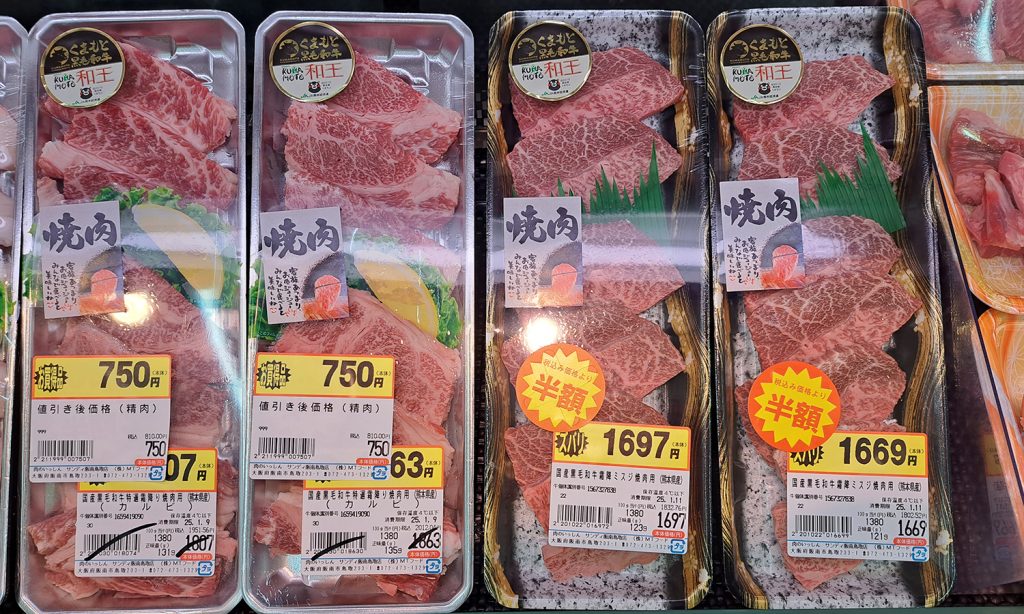
Japan’s agricultural and food exports continue to grow steadily, with beef, green tea, and sake rapidly emerging as new drivers of overall export expansion.

TOKYO, JAPAN (MERXWIRE) – According to data released by Ministry of Agriculture, Forestry and Fisheries of Japan, Japan’s exports of agricultural, forestry, fishery, and food products reached approximately JPY 1.7005 trillion in 2025, marking a record high for the 13th consecutive year. This represents a 2.3-fold increase compared to JPY 745.1 billion in 2015, underscoring the rising global competitiveness of Japanese food products.
By export market, all major destinations recorded growth in 2025. Despite tariff measures implemented by the United States in April, exports to the U.S. still rose 13.7% year-on-year to JPY 276.2 billion, driven by strong demand for green tea and beef. Exports to China also increased by 7.0% to JPY 179.9 billion, despite the impact of import restrictions.
By product category, exports of beef, rice, green tea, and yellowtail all reached record highs. In terms of markets, exports to the United States, Taiwan, and South Korea also set new records. Experts attribute the continued growth to increasing global interest in Japanese food, greater awareness driven by inbound tourism, rising health consciousness, as well as the expansion of existing distribution channels and the development of new ones.

Over the past decade, the export structure has undergone significant changes. Beef exports reached JPY 73.1 billion in 2025, a 6.6-fold increase from ten years ago, climbing from 13th to 2nd place in export rankings. Exports of green tea and matcha surged 7.1 times, rising from 15th to 4th place. As matcha gains recognition as a health-focused “superfood,” its use in beverages and desserts has expanded rapidly.
Alcoholic beverages have also performed strongly. Total exports reached JPY 95 billion in 2025, approximately 3.9 times higher than a decade ago, making it the top export category. Sake exports have benefited in part from the recognition of traditional brewing techniques as a UNESCO Intangible Cultural Heritage, as well as its strong pairing with Japanese cuisine. Meanwhile, premium Japanese whisky continues to receive widespread acclaim in overseas markets.
The number of foreign visitors to Japan in 2025 has more than doubled compared to a decade ago, becoming a key driver of food exports. Officials noted that tourists’ firsthand experiences with Japanese cuisine have enhanced global awareness, leading to an increase in Japanese restaurants overseas and stronger demand for related ingredients. Additionally, the inclusion of “washoku” (traditional Japanese cuisine) on UNESCO’s Intangible Cultural Heritage list in 2013 is also seen as an important contributing factor.
Kanto Smart Living Cooperative noted that, driven by cultural exports, tourism recovery, and growing health-conscious trends, Japan’s agricultural and food exports are expected to continue expanding. As global demand deepens and brand value strengthens, Japan’s food industry is likely to maintain steady growth momentum in the years ahead.
Media Contacts:
Kanto Smart Living Cooperative
PR Agency:
MERXWIRE INC.
Ada Huang
pr@merxwire.com
SOURCE: Kanto Smart Living Cooperative